
Types of Safety Shoes: A Practical Guide for Indian Workplaces
The main types of safety shoes differ in three ways: the toe cap (steel or composite), the sole (PU, PU-rubber, nitrile rubber or PVC) and the ankle height (low ankle, high ankle or full boot). Picking the right mix for the job matters more than the brand name on the box. This guide explains each choice in plain terms so that a purchase or stores team can match the shoe to the work.
Types of safety shoes at a glance
Most safety footwear sold for Indian factories, warehouses and sites falls into a handful of families. The table below gives a quick view before we look at each part of the shoe.
| Type | Typical build | Common use |
|---|---|---|
| Low ankle leather shoe | Leather upper, steel or composite toe, PU or PU-rubber sole | General factory floors, stores, light engineering |
| High ankle leather shoe | Leather upper above the ankle bone, padded collar | Construction, heavy engineering, uneven ground |
| Sporty or knitted safety shoe | Mesh or knitted upper, light toe cap | Warehousing, logistics, assembly lines |
| Metal-free shoe | Composite toe and textile midsole, no metal parts | Security screening areas, electrical panels, cold stores |
| Electrical hazard shoe | Non-conductive sole and toe, no metal path | Electrical maintenance as one layer of protection |
| Heat resistant shoe | Nitrile rubber sole, heat-resistant stitching | Foundries, forging, hot floors near furnaces |
| PVC gumboot | Moulded PVC, one-piece, waterproof | Wet plants, food processing, chemical washing, civil work |
Steel toe vs composite toe
The toe cap protects the front of the foot from falling objects and compression. Both steel and composite caps do this job; the difference is in weight, feel and where the shoe will be worn.
Steel toe caps
Steel caps are thin, strong and widely available, which keeps the cost down. They suit heavy industry, construction and material handling. The downsides are a little extra weight, and the fact that steel conducts heat and cold, so the toe can feel hot near furnaces or cold in a chiller. Steel also sets off metal detectors.
Composite toe caps
Composite caps are made from fibre-reinforced plastic or similar materials. They are lighter, do not conduct heat or cold, and contain no metal. That makes them a good choice for long shifts on foot, electrical work and screened areas. A composite cap is usually a little bulkier, so try the shoe on to check toe room. Range examples include metal-free safety shoes built with a composite toe and a non-metal midsole.
Some shoes also have a penetration-resistant midsole that stops nails and sharp scrap from coming through the sole. It can be a steel plate or a flexible textile layer. Ask for it on construction sites, scrap yards and anywhere with loose sharp material on the floor.
Sole types and where each works
The sole decides grip, comfort, and how the shoe copes with oil, water and heat. Check the maker’s description, because the same name can cover different blends.
- PU (polyurethane): light and cushioned, good for long hours on flat floors. Dual density PU has a softer inner layer for comfort and a harder outer layer for wear.
- PU-rubber: a PU midsole with a rubber outsole. It adds grip and resistance to wear, and handles warmer surfaces better than plain PU.
- Nitrile rubber: heavier, with good grip on oily floors and better heat resistance. This is the usual choice for foundries and hot work.
- PVC: used in moulded shoes and gumboots. It keeps water out and is easy to wash, but grip and comfort are lower than PU on dry floors.
For slip resistance, look at the tread pattern and the maker’s slip rating rather than the colour or the price. Deep, open treads clear water and mud; fine patterns grip smooth, dry floors.
Ankle heights: low, high and boots
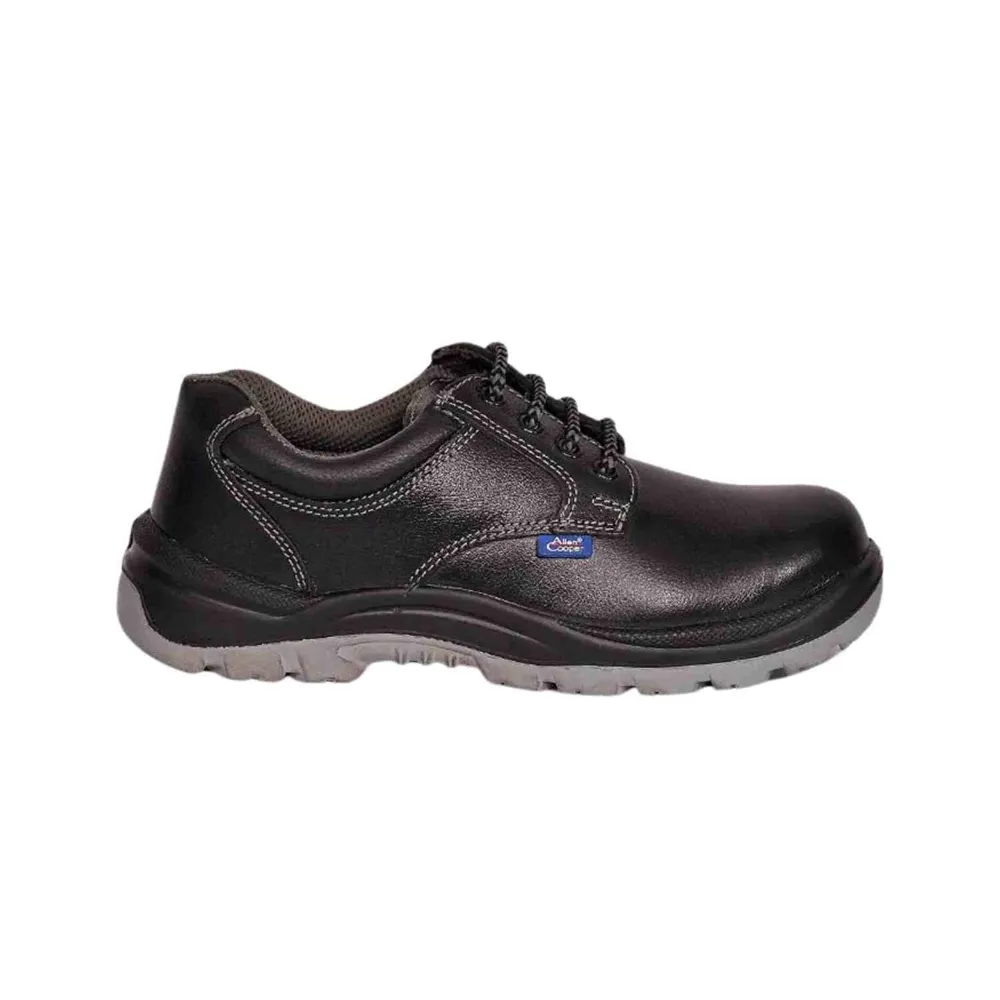
Low ankle shoes are cooler and easier to walk in, so workers are more likely to keep them on all day. They suit factory floors, stores and dispatch areas. High ankle shoes support the ankle on uneven ground, ladders and scaffolding, and keep grit and sparks out. Range examples include high ankle safety shoes with a padded collar.
Full boots and gumboots go higher still. Leather boots suit rough outdoor work. PVC gumboots are the practical answer for standing water, wash-down areas and wet civil work, where a leather shoe would soak through.
Ratings such as S1 and S3
Many makers print a code such as S1, S1P or S3 on the shoe or the box. Treat it as the maker’s rating, and read what the maker says it covers. Broadly, a lower code in this series describes a toe-protected shoe with an energy-absorbing heel and an antistatic sole, and a higher code adds features such as a water-resistant upper and a penetration-resistant midsole. Some makers also give a slip rating, for example SRC, again as the maker’s rating.
Do not confuse antistatic shoes with electrical hazard shoes. Antistatic soles let static charge drain slowly, which suits electronics and areas with flammable vapours. Electrical hazard shoes do the opposite: they are built to resist current through the sole. Choose based on the hazard your safety officer has identified.
Which job needs what
Use this as a starting point and confirm with your safety officer, since your site’s safety rules and local regulations set the minimum.
- Warehouse and logistics: light sporty or low ankle shoe with a composite or steel toe and a PU sole, for comfort over long walking shifts.
- Construction and civil sites: high ankle leather shoe with a penetration-resistant midsole and a PU-rubber sole.
- Electrical maintenance: electrical safety shoes with no metal path, used together with insulated tools, gloves and safe isolation. Footwear is never the only barrier.
- Foundry, forging and hot work: heat resistant safety shoes with a nitrile rubber sole and a quick-release or slip-on design.
- Food, dairy and wet plants: washable shoes or PVC gumboots that can be cleaned daily.
- Women on the shop floor: ladies safety shoes built on a narrower last, which fit better than a small men’s size.
Fit matters as much as features. Try shoes on later in the day, when feet are slightly larger, with the socks used at work. There should be a thumb’s width of space in front of the toes and no rubbing at the heel. A shoe that hurts will be left in the locker.
Care, checks and replacement
Clean mud and chemicals off at the end of the shift and let shoes dry away from direct heat. Polish leather uppers now and then to stop cracking. Replace a pair when the tread is worn smooth, the sole starts to split from the upper, the toe cap is exposed or dented, or after any heavy impact on the toe. The maker’s guidance on service life is a useful reference for planning bulk reorders.
Prices and buying in bulk
Prices depend on the toe cap, sole, upper and quantity. As a guide, current starting prices for a few common types are:
- Low ankle leather safety shoes: from ₹1,278.00
- High ankle safety shoes: from ₹1,800.00
- Electrical safety shoes: from ₹828.00
- PVC gumboots: from ₹300.00
These prices are a guide before GST. The final price, including any quantity discount, comes with your quote. Every order carries a GST invoice, and delivery is Pan-India.
Find the right pair
You can compare toe caps, soles and ankle heights across brands in the safety shoes range, or browse the wider foot protection category for boots and toe guards. If you are kitting out a team, send the job types, sizes and quantities on WhatsApp or by email, and we will share options and a quote.