

Full Body Safety Harness Guide: Parts, Lanyards, Anchors and Checks
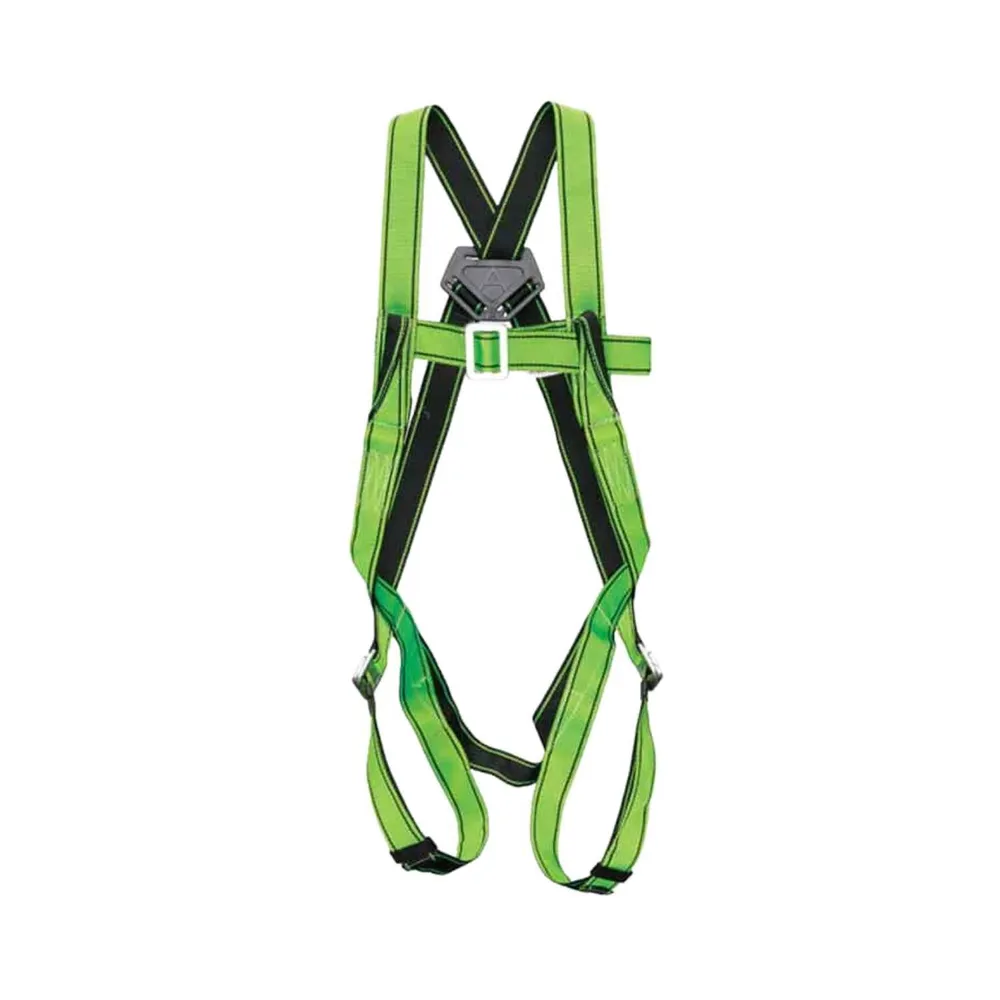
A full body safety harness spreads the force of a fall across the thighs, hips, chest and shoulders, and keeps the worker upright until rescue. It is only one part of a fall arrest system: the harness, a lanyard or fall arrester, and a strong anchor point must all work together. This guide covers the parts of a harness, how to choose one, which lanyard to pair it with, where to anchor, and the checks to do before every use.
When a full body safety harness is needed
A harness is used wherever a person could fall from a height and other measures such as guardrails, platforms or nets cannot fully remove the risk. Typical jobs include scaffolding, roof work, towers, tanks, structural steel erection, façade work, loading bays and confined space entry. Your site’s safety rules and local regulations decide the height and situations where fall protection is required, so confirm these with your safety officer.
Waist belts are not a substitute for fall arrest. In a fall, a belt loads the lower back and the person can slip out or be injured. Use a belt only for work positioning or restraint, as the maker describes.
Parts of a full body safety harness
| Part | What it does |
|---|---|
| Shoulder straps | Carry the load over the shoulders and keep the harness in place |
| Chest strap | Holds the shoulder straps together so the worker cannot slip out |
| Leg loops | Take most of the load in a fall and support the worker while suspended |
| Sub-pelvic strap | Sits under the buttocks and spreads the load in a seated position |
| Dorsal D-ring (back) | The main fall arrest attachment point, between the shoulder blades |
| Sternal or chest D-ring | Front attachment for ladders, fall arresters on rails and rescue |
| Side D-rings | Work positioning only, for example on poles and towers; not for fall arrest |
| Buckles | Pass-through, quick-connect or automatic types to adjust and close the straps |
| Fall indicator and label | Shows if the harness has arrested a fall; label carries the maker’s details and date |
How to choose a harness
Start with the task, then check the fit and features.
- Attachment points. A basic harness with a dorsal D-ring covers most fall arrest work. Add a front D-ring for ladders and vertical lifelines, and side D-rings with a waist belt for pole and tower work. A work positioning harness combines these.
- Comfort for long hours. Padded shoulders and legs and a back support help workers who wear the harness all shift, which makes them more likely to wear it properly.
- Special environments. For electrical work or areas with sparks and static, use a harness with the maker’s dielectric or antistatic rating, such as an antistatic dielectric harness. For welding, choose webbing the maker rates for heat.
- Fit. Harnesses come in sizes and adjust at the legs, chest and shoulders. Buy sizes to suit your team rather than one size for all.
- Weight. Check the maker’s user weight range, including tools carried.
For general site work, a standard full body harness with a single dorsal D-ring is often enough. A good fit means the leg loops are snug with room for a flat hand, the chest strap sits mid-chest, and the dorsal D-ring sits between the shoulder blades.
Lanyards and connectors
The lanyard joins the harness to the anchor. The right type depends on how the worker moves.
- Energy absorbing lanyard: a webbing or rope lanyard with a pack that tears open in a fall to reduce the force on the body.
- Twin or forked lanyard: two legs, so the worker can clip on to the next point before unclipping from the last and stay connected at all times while moving. Example: forked lanyard with energy absorber.
- Restraint lanyard: a short fixed lanyard that stops a worker reaching the edge at all. It is for restraint, not fall arrest.
- Retractable fall arrester: a self-retracting line that moves with the worker and locks quickly in a fall. It needs less clearance below than a long lanyard. Example: retractable fall arrester.
Use self-locking connectors (karabiners and scaffold hooks) that close and lock on their own. Never tie knots in lanyards, wrap them around sharp edges, or join two lanyards to make a longer one.
Check the fall clearance before work starts. Add up the lanyard length, the absorber’s extension, harness stretch, the worker’s height below the D-ring and a safety margin, using the maker’s chart. If there is not enough space below, use a shorter lanyard or a retractable fall arrester.
Anchor points
An anchor must be strong enough to hold a falling person, as a competent person or the anchor’s maker confirms. Handrails, pipes, cable trays and light fittings are usually not suitable. Good options include structural steel, purpose-built anchor points, beams with an anchor sling or lifeline, and horizontal lifelines designed for the job.
- Anchor above the D-ring where possible, which reduces fall distance and swing.
- Avoid anchoring far to one side, as a fall can swing the worker into a structure.
- For tanks, manholes and confined spaces, a tripod with a winch gives both an anchor and a way to lift the person out.
Inspection before every use
The user should check the harness each time it is worn, and a competent person should inspect it at intervals set by the maker and the site. Use this checklist.
- Label present and readable, with the date of manufacture inside the maker’s service life.
- Webbing free of cuts, fraying, burns, chemical stains, hardening or broken stitching.
- D-rings, buckles and adjusters free of cracks, rust, sharp edges or bending; buckles hold when pulled.
- Fall indicator not deployed.
- Lanyard and energy absorber pack intact, with no tears in the cover.
- Connectors open, close and lock fully.
Take any harness that has arrested a fall, or fails a check, out of use straight away. Store harnesses hung up in a dry place, away from sunlight, heat and chemicals.
Rescue planning and training
A worker left hanging in a harness needs to be brought down quickly, as long suspension can be harmful. Every job at height needs a rescue plan and people who know how to carry it out before work starts. Workers also need to know how to put on and adjust the harness and pick the right anchor. Our work at height training covers harness use, anchoring, inspection and rescue basics for site teams.
Prices and next steps
As a guide, current starting prices for common items are:
- Full body harness: from ₹500.00
- Karam full body harness: from ₹950.00
- Forked lanyard with energy absorber: from ₹2,727.00
- Retractable fall arrester: from ₹7,049.00
These prices are a guide before GST, and the final price comes with your quote. Every order has a GST invoice, with Pan-India delivery. You can see harnesses, lanyards, anchors and kits in the fall protection range. Send the type of work, the number of workers and sizes on WhatsApp or by email, and we will suggest a matched set with a quote.


