

Lockout Tagout Procedure: Steps, Devices, Tags and Who Does What
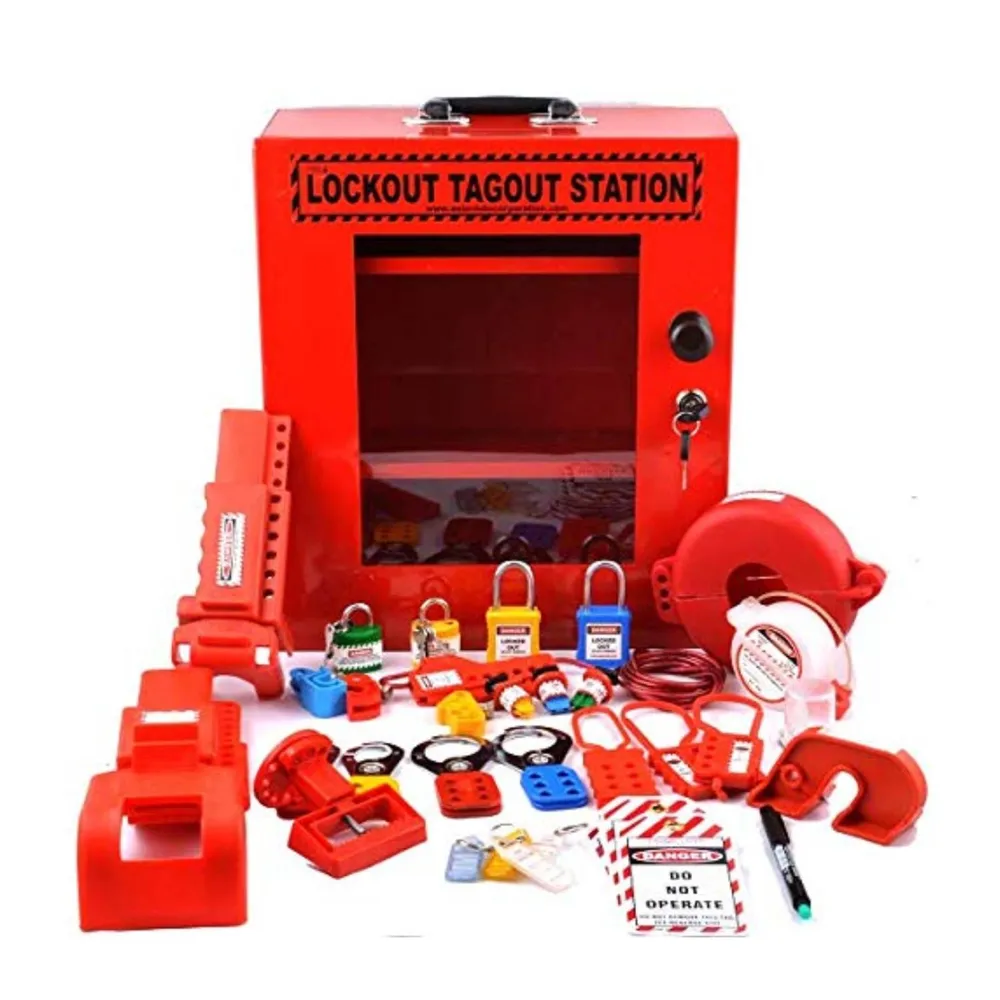
A lockout tagout procedure is a set of steps that makes a machine or system safe before maintenance: you shut it down, isolate every energy source, fit a personal lock and a tag to each isolation point, release any stored energy and then verify that nothing can start or move. Only after that check does the work begin, and the locks come off only when the job is complete and everyone is clear. This guide explains the steps in order, the devices and tags used, and who does what.
Why lockout tagout matters
Many maintenance injuries happen when a machine starts up, moves or releases energy while someone is working on it. A switched-off panel can be switched back on by a person who does not know work is going on; a closed valve can be opened; a hydraulic ram can drop under its own weight. Lockout tagout, often called LOTO, makes each isolation physical and personal. Only the person who fitted a lock can remove it, so the machine cannot be restarted while they are at risk.
Energy is not only electrical. A LOTO procedure has to cover every source the machine has:
- Electrical supply, including control circuits and backup batteries
- Pneumatic and hydraulic pressure
- Steam, water, gas and chemical lines
- Mechanical energy: springs, flywheels, raised loads, gravity
- Thermal energy: hot or very cold parts and fluids
Your site’s safety rules and local regulations set the minimum requirements. Your safety officer should own the written procedure for your plant.
Who does what in a LOTO procedure
| Role | What they do |
|---|---|
| Authorised person | A trained worker who carries out the lockout: isolates energy, fits their own lock and tag, releases stored energy and verifies zero energy before working. |
| Affected person | Operators and others who use or work near the machine. They are told before shutdown and after restart, and must never remove or bypass a lock or tag. |
| Supervisor or permit issuer | Plans the job, issues the work permit where used, coordinates group lockout and shift handover. |
| Safety officer | Writes and reviews the procedure, keeps the list of isolation points for each machine, arranges training and audits. |
Contractors working on site follow the same procedure. Brief them before work starts, and make sure they use their own personal locks.
Lockout tagout procedure: the steps in order
- Prepare. Identify the machine and the job. Check the machine’s isolation list, which names every energy source and where to isolate it. Collect the locks, tags and lockout devices you need.
- Inform. Tell the operators and other affected people that the machine is being shut down for work, and why.
- Shut down. Stop the machine using its normal controls, so that it comes to a controlled stop.
- Isolate. Operate each energy isolation point: switch off and open the isolator or breaker, close the valves, disconnect the air line. A control switch or emergency stop button alone is not an isolation point.
- Lock and tag. Fit a lockout device where needed, then fit your personal safety padlock and a filled-in tag to every isolation point. Each person working on the machine fits their own lock.
- Release stored energy. Bleed pressure, drain lines, block or lower raised parts, let flywheels stop, discharge capacitors and allow hot or cold parts to reach a safe temperature.
- Verify zero energy. Make sure everyone is clear, then try to start the machine with its normal controls. Use a suitable voltage detector on electrical parts and check gauges on pressure lines. Return the controls to off after the try-out.
- Do the work. If the job is paused, or the shift changes, the locks stay on until a proper handover is done.
- Restore. Remove tools, refit guards and check that everyone is clear. Inform the affected people.
- Remove locks and tags. Each person removes only their own lock and tag. Re-energise and check the machine runs normally.
Group lockout and shift changes
When several people work on one machine, a group lockout box or a multi-lock hasp is used. The isolation points are locked once, the keys go into the box, and every worker fits their own lock to the box or hasp. The machine cannot be restarted until the last person has removed their lock. At a shift change, the incoming worker fits their lock before the outgoing worker removes theirs, so the machine is never left without protection.
Lockout devices: matching the device to the isolation point
A padlock alone does not fit most switches and valves. Lockout devices hold the isolation point in the off or closed position and give the padlock somewhere to go.
| Device | Used for |
|---|---|
| Safety padlock | The personal lock. Each person gets their own, with one key that stays with them. Colour coding by department or trade helps. |
| Lockout hasp | Lets several padlocks be fitted to one isolation point for group work. |
| Circuit breaker lockout | Holds a miniature or moulded case breaker in the off position. |
| Valve lockout | Covers gate valve handwheels or holds ball valve handles closed. |
| Cable lockout | A flexible cable that loops through several points or odd-shaped handles. |
| Lockout station | A wall board that stores padlocks, hasps, tags and devices at the point of use. |
| Lockout kit | A portable set of common devices for maintenance teams. |
See the safety padlock, lockout hasp, circuit breaker lockout, valve lockout, cable lockout and lockout station.
Tags: what they say and what they cannot do
A tag tells everyone why the equipment is locked and who to contact. A good tag shows a clear warning such as “Danger, do not operate”, the name of the person who fitted it, their department and contact, the date and the reason for the lockout. Tags should be durable, readable in the work area and fixed with the lock so they cannot fall off.
A tag on its own is only a warning; it does not physically stop anyone. Where an isolation point truly cannot take a lock, the procedure should add extra measures, such as removing a fuse or a valve handle, and your safety officer should sign off those cases in writing. See lockout tags.
Making the procedure stick
- Write a machine-specific isolation list with photos of each isolation point, and keep it at the machine.
- Label isolators and valves on site so the list and the plant match.
- Issue personal padlocks to each authorised person and keep a register.
- Train authorised people in the full procedure, and brief affected people on what a lock and tag mean.
- Review the procedure after any change to the machine and walk through it with the team at intervals.
Our lockout tagout training covers the procedure step by step with practical device use, and electrical safety training covers safe isolation of electrical equipment in more depth.
Indicative prices and next step
Live starting prices for a first budget, shown as a guide before GST; the final price comes with the quote:
- Safety padlock: from ₹200.00
- Lockout hasp: from ₹275.00
- Lockout tags: from ₹130.00
- Lockout tagout kit: from ₹249.00
All devices are listed in the lockout tagout category. Share the number of authorised people and the types of isolation points in your plant on WhatsApp or by email, and we will suggest a device list and send a quote with a GST invoice and Pan-India delivery.