
All Categories×

Safety Training

Need help choosing? Talk to us.

Safety equipment supplier in India
Lifting Tools & Tackles Safety

Lifting Tools and Tackles Safety Training

Slings, shackles, chain blocks and other lifting tackles wear out quietly until they fail under load. This training teaches your team to choose the right tackle, inspect it before use and remove damaged gear from service.

  • At your site or online
  • Any language
  • Batch size as per your team
  • Certificate for every participant
Lifting Tools and Tackles Safety Training

What your team will learn

  1. 1Types of lifting tacklesWire rope, chain and webbing slings, shackles, eye bolts, hooks, chain blocks and pulley blocks.
  2. 2Safe working loadReading SWL marks and the effect of sling angles.
  3. 3Inspection before useWhat to look for on each type of tackle.
  4. 4Rejection criteriaBroken wires, stretched links, cuts, deformation and missing tags.
  5. 5Correct useHitches, protecting slings from sharp edges, never shortening with knots.
  6. 6StorageKeeping tackles clean, dry and off the floor.
  7. 7Periodic inspectionInspection schedules, colour coding and registers.
  8. 8Lifting plan basicsWeight, centre of gravity and a clear landing area.

How we run it

On-site at your premisesWe train your team at your site, with examples from your own work areas and equipment.
Online live sessionFor teams in different cities or shifts: theory, videos and a question round with a trainer.
Your languageHindi, English or a regional language, whichever your team understands best.
Duration and batch sizeFrom a short awareness session to a full-day programme, planned around your shifts and team size.
Certificate for every participantEach person gets a certificate of participation; you get an attendance record for your files.

Who should attend

  • Riggers and fitters
  • Maintenance teams
  • Store keepers who issue tackles
  • Crane operators
  • Supervisors
  • Safety officers

Inspect every tackle, every time

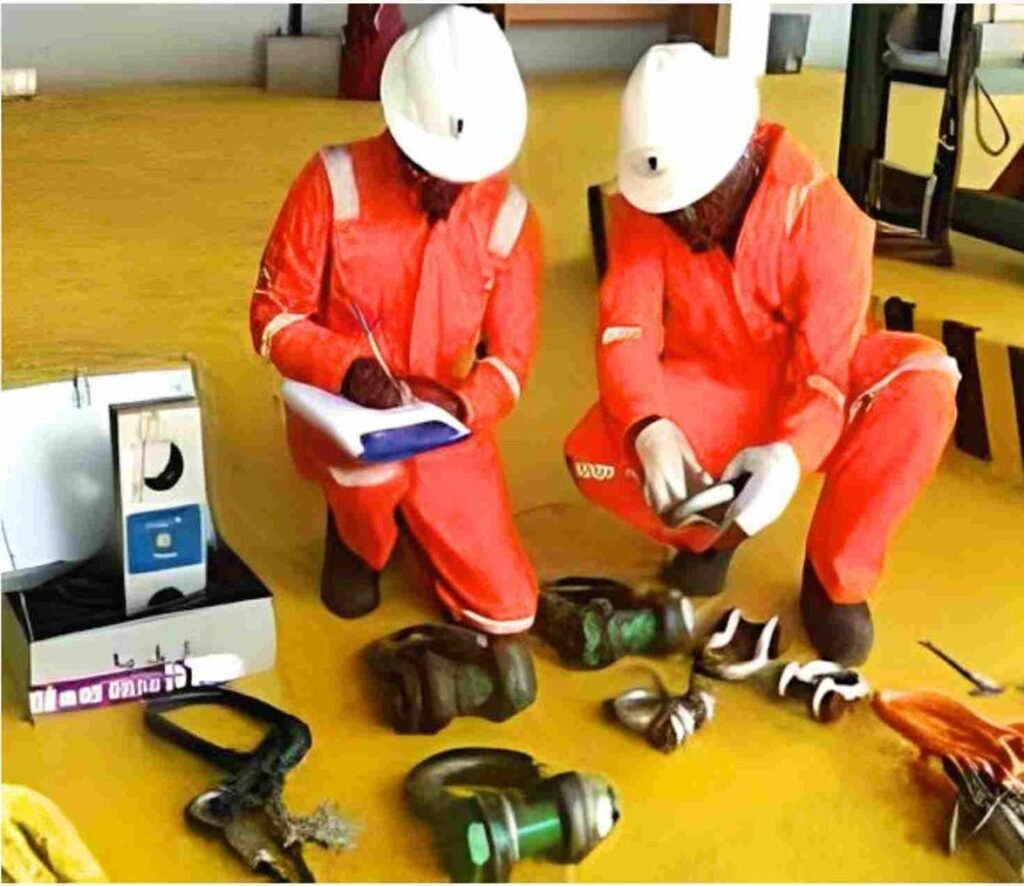
A sling with a few broken wires or a shackle with a bent pin can still look usable. The training is practical: participants inspect real slings, shackles and chain blocks and decide which ones pass and which go to the scrap bin.

Combine it with crane operator safety training and material handling safety.
Request a training

Tell us about your site. We reply with a training plan and a quote, usually within one working day.

  • At your site or online
  • Any language
  • Duration and batch size as per your team
  • Certificate for every participant
Or ask on WhatsApp

Other safety trainings

All trainings
Industrial Safety Training Industrial Safety Training Hazard spotting, PPE, permits and safe work habits on the shop floor. View details →
Work at Height Safety Training Work at Height Safety Training Harness, anchor points, ladders and scaffolds, and rescue at height. View details →
Forklift Safety Training Forklift Safety Training Pre-use checks, load handling, and pedestrian safety around forklifts. View details →
Crane Operator Safety Training Crane Operator Safety Training Safe operation of EOT cranes and hoists, signals and lifting plans. View details →
Material Handling Safety Training Material Handling Safety Training Manual lifting, trolleys, stacking and safe movement of materials. View details →
Welding & Hot Work Safety Welding & Hot Work Safety Hot work permits, fire watch, and fume and spark control. View details →

Lifting Tools & Tackles Safety FAQs

Quick answers to what companies ask us most. For anything else, ask us on WhatsApp.

Ask on WhatsApp
What are lifting tools and tackles?

Equipment used to attach and lift loads, such as slings, shackles, eye bolts, hooks, chain blocks and pulley blocks.

How often should tackles be inspected?

Before every use by the user, plus periodic inspection by a competent person as required for your site. We explain how to keep the records.

Can you inspect our tackles during the training?

We use your tackles as practice examples. A formal inspection and certification is a separate service by a competent person.

Do participants get a certificate?

Yes, a certificate of participation for each person.

Need a quote?Chat on WhatsApp